




Bridging the gap
Expressionist pioneer Ernst Ludwig Kirchner heralded a new perspective in 20th-century painting
Ernst Ludwig Kirchner (1880–1938) is regarded as one of the key figures in 20th-century European art. A Modernist to his bones, he sent seismic waves through the art world with his hard-edged, intensely colored paintings and disseminated his ideas through Die Brücke art movement and the MUIM-Institut school of modernist painting, both of which he cofounded.
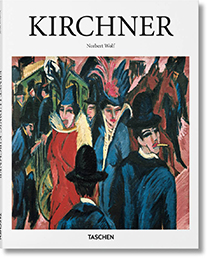
Kirchner’s work reconciled past and present through an Expressionist prism, reflecting the latest avant-garde ideas in art, while exploring traditional academic approaches and subjects. His works tackled social, moral, and emotional questions with a fierce intensity. Distorted perspectives, rough lines, and unusual colors were mainstays of his practice, as well as a recurring interest in capturing the human form, whether in frenetic city vistas such as Berlin Street Scene (1913) or in his famously decadent studio.
In this introductory book, we explore the stretch of Kirchner’s career through Germany and Switzerland, including his founding of Die Brücke, and his inclusion in the Nazis’ infamous “degenerate art” exhibition in 1937. Along the way, we’ll encounter vivid landscapes, stark nudes, intense urban settings, and, above all, a persistent emphasis on the emotional experience of painter and viewer.
Basic Art 시리즈의 특징
문화적·역사적 중요성을 아우르는 작가의 삶과 작품에 관한 상세한 연대기별 요약서
간결한 일대기 소개
설명이 첨부된 100점의 컬러 도판


Expressionist pioneer Ernst Ludwig Kirchner heralded a new perspective in 20th-century painting
Ernst Ludwig Kirchner (1880–1938) is regarded as one of the key figures in 20th-century European art. A Modernist to his bones, he sent seismic waves through the art world with his hard-edged, intensely colored paintings and disseminated his ideas through Die Brücke art movement and the MUIM-Institut school of modernist painting, both of which he cofounded.
Kirchner’s work reconciled past and present through an Expressionist prism, reflecting the latest avant-garde ideas in art, while exploring traditional academic approaches and subjects. His works tackled social, moral, and emotional questions with a fierce intensity. Distorted perspectives, rough lines, and unusual colors were mainstays of his practice, as well as a recurring interest in capturing the human form, whether in frenetic city vistas such as Berlin Street Scene (1913) or in his famously decadent studio.
In this introductory book, we explore the stretch of Kirchner’s career through Germany and Switzerland, including his founding of Die Brücke, and his inclusion in the Nazis’ infamous “degenerate art” exhibition in 1937. Along the way, we’ll encounter vivid landscapes, stark nudes, intense urban settings, and, above all, a persistent emphasis on the emotional experience of painter and viewer.
Basic Art 시리즈의 특징
The author:
Norbert Wolf는 레겐스부르크와 뮌헨 대학에서 대학에서미술사, 언어학, 중세 연구를 전공하였고, 1983년에 박사학위를 취득했다. 마부르크, 프랑크푸르트, 라이프치히, 뒤셀도르프, 뉘른베르크-에어랑엔, 인스부르크에서 방문교수직으로 있었다. 타셴에서는 디에고 벨라스케즈, 에른스트 루드비히 키르히너, 카스파 다비드 프리드리히, 표현주의, 로마네스크, 풍경화 등을 출판했다.
Norbert Wolf는 레겐스부르크와 뮌헨 대학에서 대학에서미술사, 언어학, 중세 연구를 전공하였고, 1983년에 박사학위를 취득했다. 마부르크, 프랑크푸르트, 라이프치히, 뒤셀도르프, 뉘른베르크-에어랑엔, 인스부르크에서 방문교수직으로 있었다. 타셴에서는 디에고 벨라스케즈, 에른스트 루드비히 키르히너, 카스파 다비드 프리드리히, 표현주의, 로마네스크, 풍경화 등을 출판했다.


