


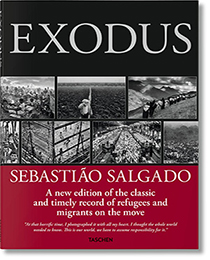


It has been almost a generation since Sebastião Salgado first published Exodus but the story it tells, of fraught human movement around the globe, has changed little in 16 years. The push and pull factors may shift, the nexus of conflict relocates from Rwanda to Syria, but the people who leave their homes tell the same tale: deprivation, hardship, and glimmers of hope, plotted along a journey of great psychological, as well as physical, toil.
Salgado spent six years with migrant peoples, visiting more than 35 countries to document displacement on the road, in camps, and in overcrowded city slums where new arrivals often end up. His project includes Latin Americans entering the United States, Jews leaving the former Soviet Union, Kosovars fleeing into Albania, the Hutu refugees of Rwanda, as well as the first “boat people” of Arabs and sub-Saharan Africans trying to reach Europe across the Mediterranean ea. His images feature those who know where they are going and those who are simply in flight, relieved to be alive and uninjured enough to run. The faces he meets present dignity and compassion in the most bitter of circumstances, but also the many ravaged marks of violence, hatred, and greed.
With his particular eye for detail and motion, Salgado captures the heart-stopping moments of migratory movement, as much as the mass flux. There are laden trucks, crowded boats, and camps stretched out to a clouded horizon, and then there is the small, bandaged leg; the fingerprint on a page; the interview with a border guard; the bundle and baby clutched to a mother’s breast. Insisting on the scale of the migrant phenomenon, Salgado also asserts, with characteristic humanism, the personal story within the overwhelming numbers. Against the indistinct faces of televised footage or the crowds caught beneath a newspaper headline, what we find here are portraits of individual identities, even in the abyss of a lost land, home, and, often, loved ones.
At the same time, Salgado also declares the commonality of the migrant situation as a shared, global experience. He summons his viewers not simply as spectators of the refugee and exile suffering, but as actors in the social, political, economic, and environmental shifts which contribute to the migratory phenomenon. As the boats bobbing up on the Greek and Italian coastline bring migration home to Europe like no mass movement since the Second World War, Exodus cries out not only for our heightened awareness but also for responsibility and engagement. In face of the scarred bodies, the hundreds of bare feet on hot tarmac, our imperative is not to look on in compassion, but, in Salgado’s own words, to temper our behaviors in a “new regimen of coexistence.”
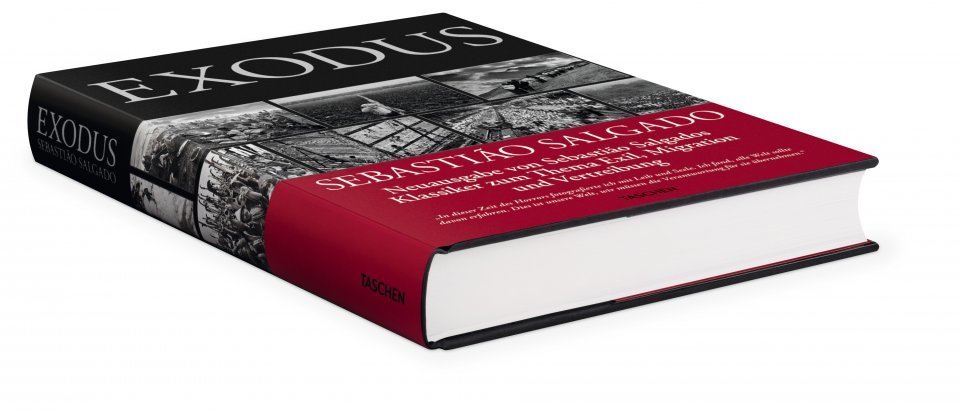
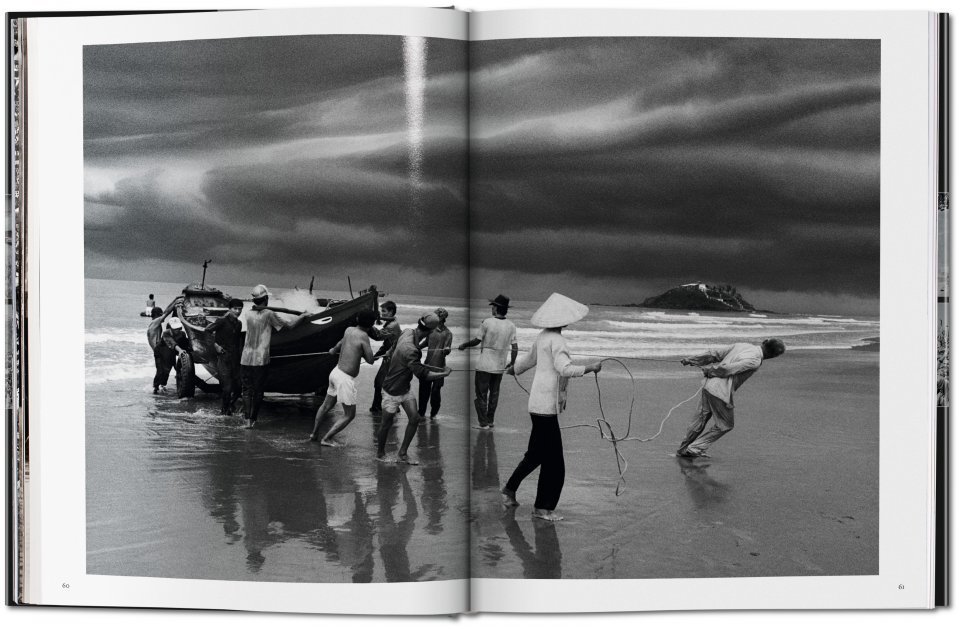
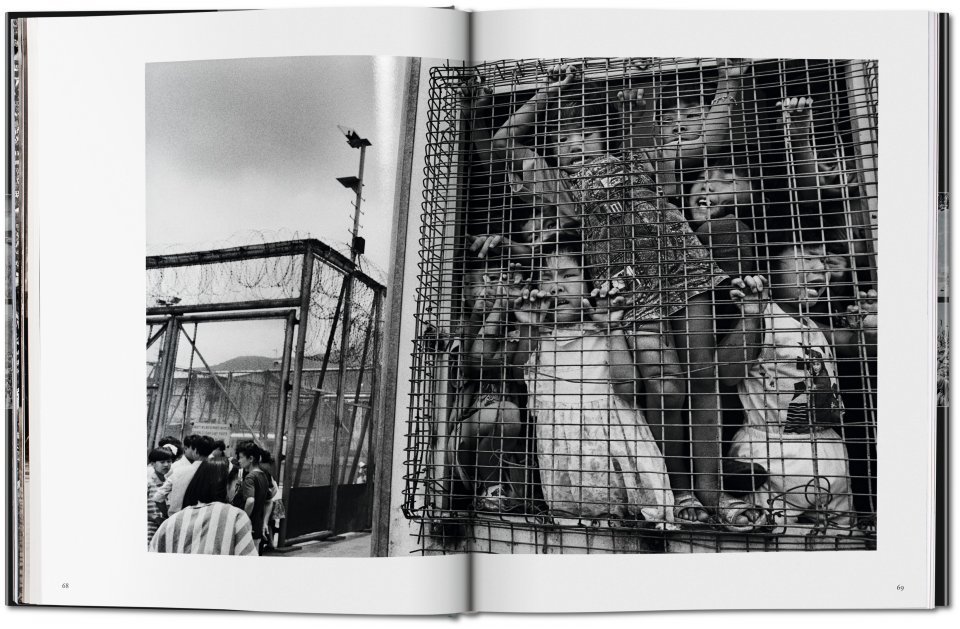
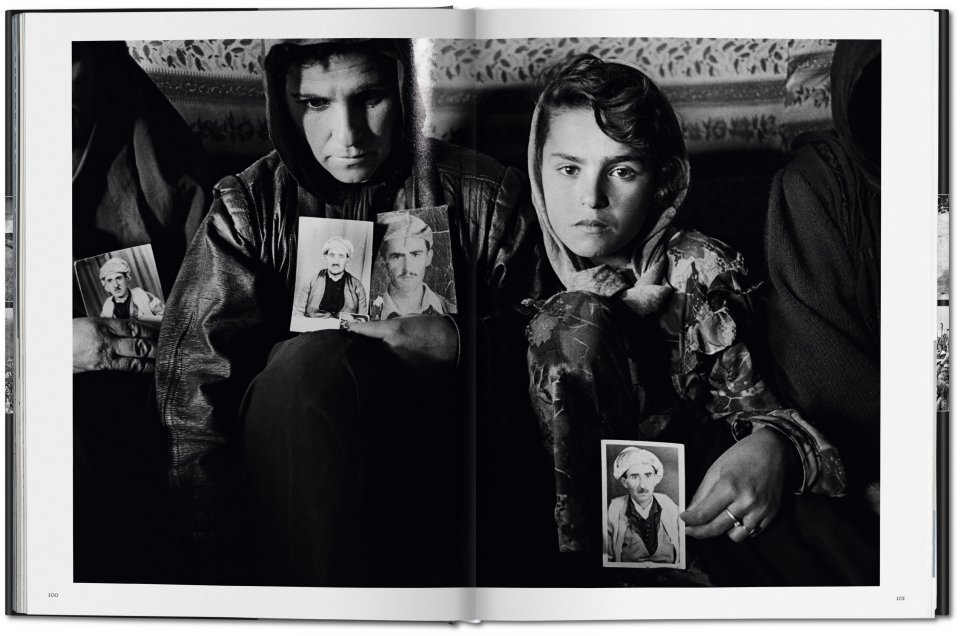
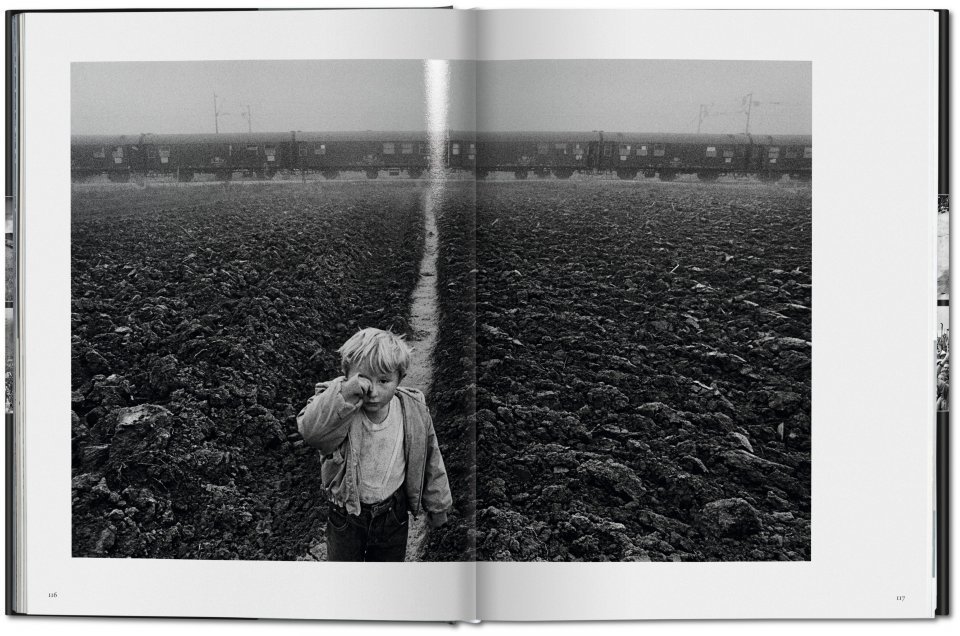
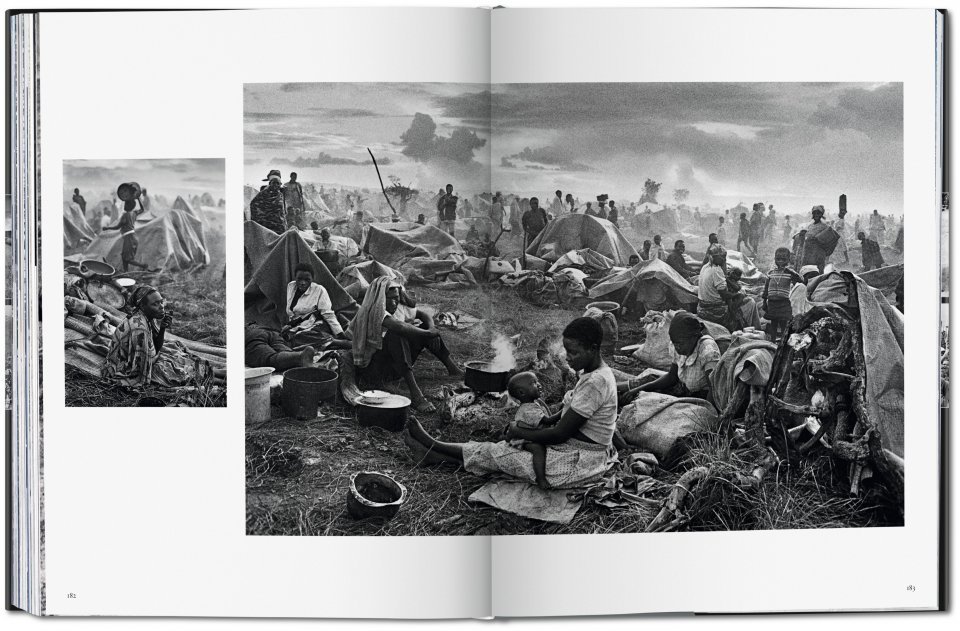
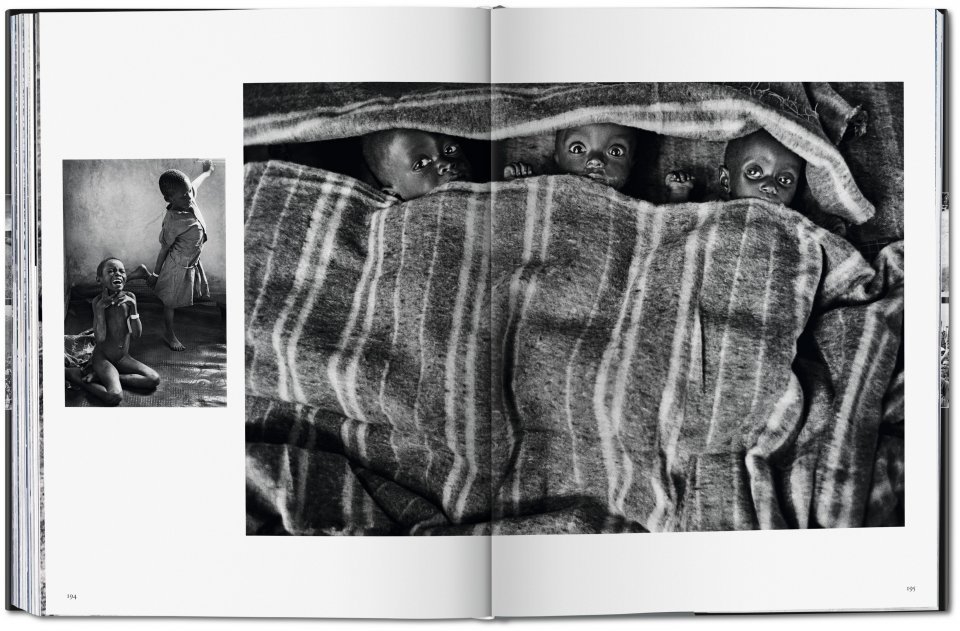
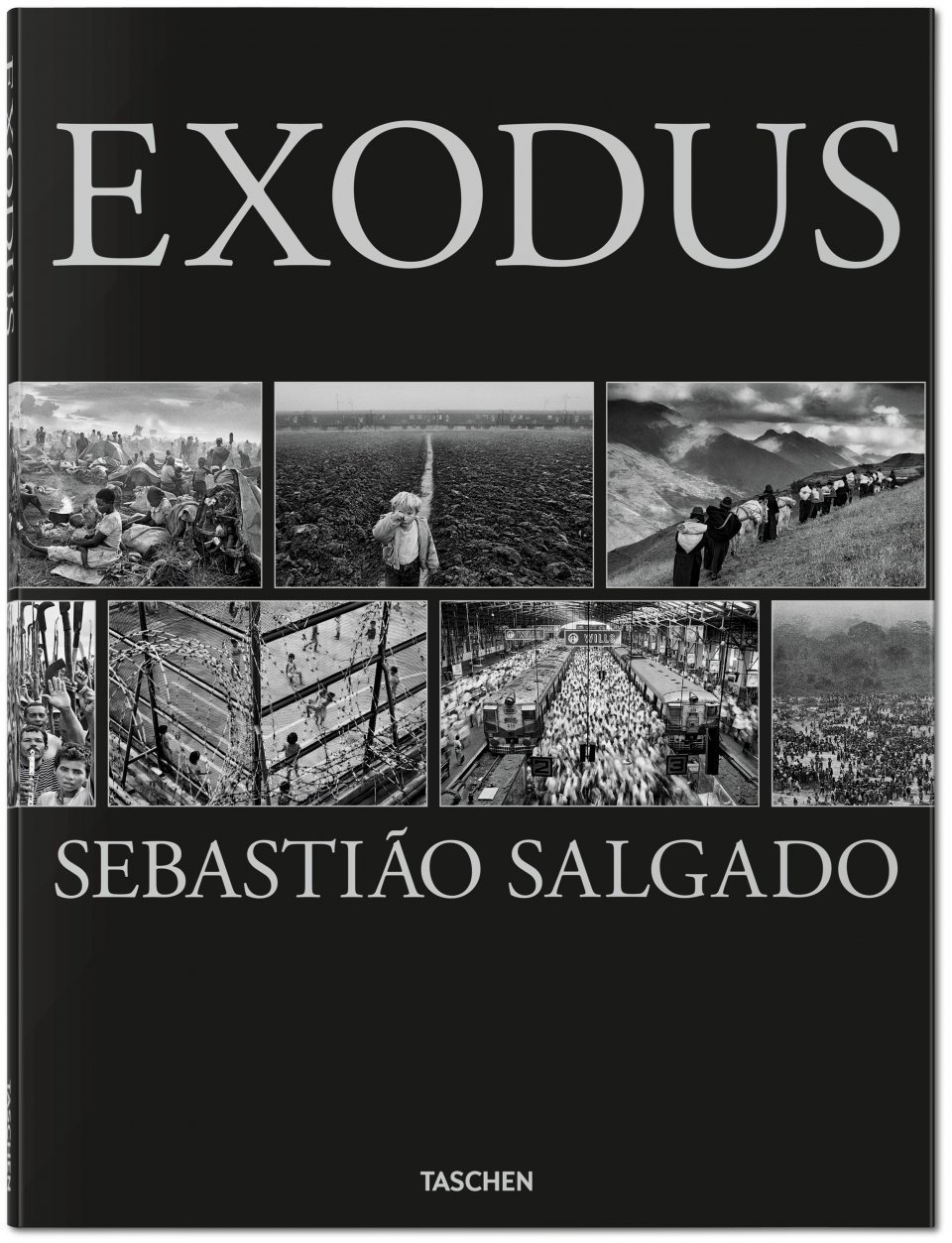
Salgado spent six years with migrant peoples, visiting more than 35 countries to document displacement on the road, in camps, and in overcrowded city slums where new arrivals often end up. His project includes Latin Americans entering the United States, Jews leaving the former Soviet Union, Kosovars fleeing into Albania, the Hutu refugees of Rwanda, as well as the first “boat people” of Arabs and sub-Saharan Africans trying to reach Europe across the Mediterranean ea. His images feature those who know where they are going and those who are simply in flight, relieved to be alive and uninjured enough to run. The faces he meets present dignity and compassion in the most bitter of circumstances, but also the many ravaged marks of violence, hatred, and greed.
With his particular eye for detail and motion, Salgado captures the heart-stopping moments of migratory movement, as much as the mass flux. There are laden trucks, crowded boats, and camps stretched out to a clouded horizon, and then there is the small, bandaged leg; the fingerprint on a page; the interview with a border guard; the bundle and baby clutched to a mother’s breast. Insisting on the scale of the migrant phenomenon, Salgado also asserts, with characteristic humanism, the personal story within the overwhelming numbers. Against the indistinct faces of televised footage or the crowds caught beneath a newspaper headline, what we find here are portraits of individual identities, even in the abyss of a lost land, home, and, often, loved ones.
At the same time, Salgado also declares the commonality of the migrant situation as a shared, global experience. He summons his viewers not simply as spectators of the refugee and exile suffering, but as actors in the social, political, economic, and environmental shifts which contribute to the migratory phenomenon. As the boats bobbing up on the Greek and Italian coastline bring migration home to Europe like no mass movement since the Second World War, Exodus cries out not only for our heightened awareness but also for responsibility and engagement. In face of the scarred bodies, the hundreds of bare feet on hot tarmac, our imperative is not to look on in compassion, but, in Salgado’s own words, to temper our behaviors in a “new regimen of coexistence.”
The photographer:
Sebastião Salgado는 1973년 파리에서 사진 전문 작가로서 처음 일을 시작했고, 이후에는 사진 에이전시인 Sygma, Gamma and Magnum Photos에서 근무했다. 1994년, 그와 그의 와이프 렐리아는 살가도의 전속 에이전시인 Amazonas images를 설립하였다. 살가도의 사진 프로젝트는 수차례 전시된 바 있으며, 책으로도 출간되었다. 그의 작품 활동에는 (1986), (1986), (1993), (1997), (2000), (2000), (2007) 등이 있다.
The editor and author:
Lélia Wanick Salgado는 파리에서 도시계획과 건축을 공부했다. 그녀는 1970년대 초부터 사진에 관심을 갖기 시작했으며, 1980년대에는 세바스티앙 살가도에 관한 수많은 사진집과 전시회를 기획하고 디자인하게 되었다. 1994년부터 그녀는 Amazonas images의 디렉터로 일하고 있다.
 |
 |


